


Following previous HBO shows, whenever they have a series that involved crime, action, horror, they normally have a title design that helps portray this idea across to its audience, combining the colour of the text and also the design to help invoke a certain idea into the audiences minds upon first glance.


Colour
In order to further convey the themes and genres featured within the series Gangsta, the colour of the Title will help to do this as they will be dark red and black, which signifies danger, fear, death, evil, power, desire and strength.
large.jpg)
Title
In order to establish Gangsta's brand identity, the typeface that gangster will use will have a bold, clean but also gritty appeal that will insinuate an ominous nefarious impression, so that anyone who looks at the title straight away will be able to identify that the brand is connected with some form of vice activity. This will help to strengthen the notion about the series being a crime thriller action genre.
Here's Variations of title logo's that i created, using the font Impact bold as my starting point, then using a selection of textured paint brushes to fragment the individual letters, then re-layering the text using with various paint textures, finally, placing a blooed hand texture behind the text.


After experimenting with the text designs, this is what i came up with for my final design


Whilst doing further branding research about HBO, and their original created series, i came across an interesting fact.
A key advertisement feature that HBO continually uses throughout their ad campaigns for their television series, is that they have an exclusive 6,500 sq ft 12 story billboard sign, which is displayed at the side of the Mani Brothers LLC building in Los Angeles on 9000 Sunset Boulevard, West Hollywood, CA 90069. The billboard typically displays either the official title for the series with the date and time of the premiere, or it features characters from the series.
The information presented is not something that is openly out on the internet to be found, i had to research first about the billboard, because i was not to sure if it was exclusive to HBO. After further research i was able to locate the road, and eventually the name of the building, who owns it, and the address; finding out that HBO has excessive rights to the mural.
So for branding purposes, when i'm creating the advertisement material for GANGSTA, besides creating billboards and bus stop posters and buss advertisement,i have to create a billboard signage for the Mani brothers building
Below is all of the HBO murals created for different HBO series on the Mani brothers building:


The Brand equity of the HBO network is worldwide renowned, not only gaining them continual syndication deals of their popular original content like Game of thrones and True Detective, but also gaining their television series sponsorship deals via intertextual created adverts that are a pastiche to their series, be it either via a picture billboard promoting a product, or a television advert using a character recognised through one of their popular television series, or even a music video created paying homage to the show; like how the DK agency on behalf of HBO partnered with Snoop Dogg to create a music video, “Oh Sookie,” as a tribute to the show True Blood’s main character: Sookie Stackhouse.
The result of this was the brand equity of True blood was further fortified, grossing in over one million views within 24 hours of release, gaining additional audiences as due to the shared content not only from Snoop Doggs fans, but also the news coverage appearing in the New York Times, Entertainment Weekly, The Huffington Post, and the Perez Hilton Website; this helped grow the audience 3% above season 2, and 67% above season one to average of 13 million viewers an episode.

Because of HBO's extensive and unique marketing techniques, it allows for their programmes to gain the recognition within the advertisement traffic that competes for a sharing part of the audience. So for this reason, the marketing and branding will be outsourced to partners of HBO such as the DK advertising agency, who will be responsible for establishing the brand and marketing for Gangsta.

Having selected my actors for each character role, i have taken the main 7 actors of my series and created them into a live action adaptation of the character that they’re going to be playing.
Each character has been selectively given their own unique wardrobe, that appropriates the original design initially shown in the Manga.
The idea behind each character design was to create a new uniform for them, that slightly resembles their original clothing worn in the Manga, but further elaborating on the design, finding real world examples of their clothing.
Below is the mood board creative process in which i went through to create each character, using photo shop:
Charlie Hunhamm as Worrick Arcangelo
At first, adapting Worrick was hard for me as i had writers block and didn't know where to start, where this was my first image that i edited out of all of the characters. Having searched the internet for a while, i came across a variety of suits that i deemed suitable for Worrick and Nicolas, as they both have a similar dress sense. Using adjustment layers and layer masked i changed the colour of the shirt and suit.
I also came across a cosplay picture of a fan dress as Worrick with an eye-patch, to which i borrowed from her in order to place it over Charles eye. The picture of the man holding the gun was just a visual example to show me how a gun should be angled, as originally i was going to have Worrick drawing for his gun.

Iko Uwais as Nicolas Brown
This process pretty much followed the same as Worricks. Initially however, i used only the face of the actor on the Manga characters body, using the chest of an athlete as the open shirt chest display for the design. But because i thought that looked basic, i further worked on the design, finding a suit, and editing it so that the colours matched the original manga design.

Liana Mendoza as Alex Benedetto
Due to Liana doubling up as Kim Kourdashian on a few occasions, i used Kims body as the template, as i could not find a suitable full body picture of Liana for me to edit that would resemble the character design.

Robert De Niro as Daniel Monroe
With Daniel Monroe, his design was straight forwards, as i was able to find a yellow/light brown/ cream double breasted suit. I changed the posture of his legs so that he's standing up straight, and i also changed the colour of the suit to white, following the original design of the one displayed on the manga.

Danny Trejo as Uranos Corsica
With Uranos design, because i was trying to find a purple double breasted suit, i stumbled upon this blue suit by accident, but because of the clothing displayed in the picture, i felt that it suited Danny Trejo and Uranos Corsica, so i created something new and original, more suiting Danny's style.

Maisie Williams as Loretta Cristiano Amodio
With Loretta's design, i wanted to try and keep it as much to the manga as possible for the initial design, as this would help me to further visualise Maisie playing this role and help me finally decided if i was happy with her being casted as Loretta. Upon adapting this character into the live version, there was a few things i struggled with, such as turning the hair blonde, although, the overall look achieved with the edit i am happy with. One thing that i would like to have changed, but i did not have the experience to do so, was the upper cheek muscle around the nose area of Maisies face as she frowns, just to make it look a bit more authentic.

Umma Thurman as Georgina Paulklee
With Gina Paulklee's design, i found this laborious, as it was not a very easy task, it required me going through many website for hours, trying to find the appropriate and suitable combat gear to photoshop Umma around. Having searched for ages, i pieced together bits of clothing that i felt would best portray the live action adapted version of Gina.

Having adapted all of these characters into their live action version was harder than i initially though, as i had to scour the internet for hours finding specific types of clothing, in a specific posture, with a high enough resolution for me to edit. However, doing this i definately learnt a lot of new techniques that i did not know before, if anything, it was sort of like a flukey de-ja-vu in that, even though i didn't know what i was doing, i still somehow managed to know what i as doing.

Having signed unto IMDb, i also used this website to help cast the actors suitable to carry out the roles of the characters in GANGSTA. This process too was a VERY HARD process, and very laborious! As this was not a case of me just saying, i want X-Y and Z actor; i had to look through each individual profile and find examples as to why i felt that they would be suitable for the character role i chose them for. Of course i had my wish list before i approached this task, actors whom i thought at first glance would suit the roles straight away, however, to my disappointment, as i researched further about them (such as JOE Pesci) i found out that they either were no longer acting, or did not suit the role given to them.
The main factors that i took into consideration when i was casting these actors in order to select if they were suitable for the character role was:
Casting call requirements:
Looks: if they resembled the character
Acting ability & experience: Proven credited examples of prior experience acting out similar role in television, and also film
Popularity: For certain roles, besides having a capable character, a popular character will help sell the series
Versatility: Although they may be good at acting, can they also perform stunts, as constant stunt doubles would be expensive and time consuming
The main factors that i took into consideration when i was casting these actors in order to select if they were suitable for the character role was:
Casting call requirements:
Looks: if they resembled the character
Acting ability & experience: Proven credited examples of prior experience acting out similar role in television, and also film
Popularity: For certain roles, besides having a capable character, a popular character will help sell the series
Versatility: Although they may be good at acting, can they also perform stunts, as constant stunt doubles would be expensive and time consuming
How i went about searching for my actors, was first i went to the preferred list of people whom i had noted down (such as Iko Uais, Maisie Williams, Umma Thurman, Robert De Niro) and casted them against my casting call requirements, then i searched through series and movies that i liked, pulling up multiple actors profiles for each role, casting them individually until i was happy with the actor that i had chosen for a specific character. For example, before the actress Jonny Sequoyah was chosen to play Nina, there was another actresses, Kylie Rogers, that had been selected to also play the same role, so i had to re-look over various episodic material in order to make a firm decision as to whom would fit the role better, and i had to do this for over 30 characters, taking all of the actors casted for each individual character through a filtering process to decide if they would suit the role.
Talent Agent VS Lawyer VS Manager
Whilst casting the actors, when i was taking down their contact details, at first i was confused, because they had so many contact details to get through to them on, so many people representing them that i did not know whom was more important than the other. The descriptive roles i kept on seeing was either talent Agent, legal representative and manager. So in order to distinguish who done what, i done some research into their job descriptions to find out exactly what they are.
Here's the results that i found
Talent Agent: Talent agents is an agency that finds work for their talent (actor, writer, musician, singers, directors et.), representing them across their network of entertainment links that they have gathered throughout the years, trying to gain their client more work. The bigger the agency, the more clients they have, and the more likely you are to get work if your attributed to a reputable Agency. Talent agents normally take a 10% fee
Legal representative / entertainment lawyer: legal representative is a person that handles all of the legal aspect for a client, such as negotiation a contact, or chasing up the claim if a contract is broken. There's commonly two roles that a legal representative is used for, such as a Transactional attorney, who drafts and negotiates contracts, and a litigator, who handles claims and lawsuits such as a breach of contract, copyright infringement, fraud etc.
Manager: Managers coordinate and oversee the career their talent (actors, directors, writers and musicians ect). They are not regulated by the talent Agency Act and generally receive commissions of 15-20% of the client's gross income. Managers focus on strategising and monitoring the client's overall career.
A talent can have all three of these representatives, however, if they have a Talent Agent and a Manager, that would usually result in the talent getting a 25-30% cut. Although, if a talent has both, it means that the manager is more interested in the talent and boosting their profile to get them more work, working on their photoshoots and show reels to keep them current, whilst the talent agent acts primarily as the promoter, trying to promote the talent to get them work also whilst representing other Talent at the same time.
Having carried out this research, it's shown me that when taking down the contact details, it does not matter if i get the talent agent or the manager, as they are both responsible for dealing with the specific talent.

Finding my film crew to work on GANGSTA was VERY HARD! Harder than i initially thought, because a lot more people were involved in television that i expected, and as i began to research into who i would like to work on the series i had discovered a lot of roles that i didn’t know had sub sections.
To begin with, i took out an IMDbPRO account; so that i could look through their database and examine the cast and crew involved in television series which i liked, in order to grasp an idea of the filmmakers and crew involved in the production process. As i began looking into these series, i learned about many roles that i had either: not understood as the terminology differed when applied to the television industry, nor heard of, such as for example:
Executive producer / Show Runner:
With this term its obscure in the sense that, when applying it to the television industry, traditionally the executive producers were the chief executives, the ones who created the new program and pitched it to the television networks, supervising the creative content as well as the financial aspects of the production, taking on dual roles at times as the writer and producer. However, because of this term being applied to a wider range of roles, from those solely responsible for financing, to honorific roles, or even the creator, the term show runner has came into affect. The show runner was created to identify the producer who held ultimate management and creative authority for the program that they’re working on.
Co-executive / Supervising producer: These producers help with the writing process of the series that they’re working on. Executive producers often hire writers whom are experts within a specific genre, to help contribute towards building the story and writing the script.
Production designer: A production designer is the person who holds senior authority over the art department, working with the producer and director to establish what is required of each scene location design during the preproduction stages, handing over their designs (photographs, sketches, mood boards ext) to the Art directors who then oversee the production of the these designs working with the talent within their department.
property master: A Props master is someone who is responsible for the production of the film props. This responsibility includes purchasing, acquiring or manufacturing the props needed, and also being on set during filming incase any of the props need amending. During Preproduction the props master develops a props breakdown, mapping out the the the logical progression of each prop throughout the story i.e. if in one scene the gun prop has no blood then the next scene it needs blood and to be damaged a certain way.
Music supervisor: Music supervisors are professionals with a wide encyclopaedic knowledge of music culture and history, plus the process of licensing and negation. They are the ones responsible for finding the appropriate piece of music to match specific scenes throughout the production, whether it be a television show, movie, game or advert.
Sound supervisor / editor: A Sound supervisor / sound editor is responsible for selecting and assembling sound foley to pass onto the sound re-recording mixer. Sound supervisors typically use an organised catalog of sound recording that they have amassed over the years, and at times also record authentic foley for the production which they’re working on.
Music editor: The music editor is responsible for editing a piece of music into the scene. After the music supervisor has acquired the music, the music editor will pick apart the track and further work on it so that it fits the scene better.
sound re-recording mixer: A Sound re-recording mixer is the person whom mixes recorded dialogue, sound effects and music to create the soundtrack for a feature film, TV advert, or game.
Digital intermedia colourist: A digital intermedia colourist is another word for a colourist
Visual Effects Producer: A Visual effects producer is responsible for the project management of the VFX department, making sure that everything is running on time, dealing with the budget, and bringing the project on schedule and within the budget, working with the Visual effects supervisor to carry out the project.
Visual effects supervisor: A visual effects supervisor manages and oversees the creation of the visual effects, working with the director during pre production in order to create a list breakdown of VFX requirements that the production will need, then working with the VFX supervisor to bring in talent capable of carrying out the task, overseeing and guiding them as they complete the project.
Whilst researching all of these roles, i came across an interesting article which displayed a hierarchy breakdown of all of these roles, and how each department communicates amongst one another, taking instructions from the Executive producer at the top.

Having learnt about all of these roles definitely helped me to understand more about the process of producing television, and certainly helped me with selecting casting the Filmakerks & crew needed to bring the project GANGSTA to life.
Casting filmcrew
Of course i initially had my wist list of directors (John Woo, Gareth Evans, Quentin Tarantino), however, having done this research has helped me to understand how they would fit into working on a detailed television series, such as GANGSTA which is being commissioned for HBO, because my initial post suggests that i would like Gareth Evans as a Director, however, having looked at the business structure and work that goes into such a series, one director may not be able to harbour all of the work required to deliver constant compelling visuals, so i will need more directors, whom will be casted in to work on specific episodes to help deliver the series, which i had not fully though about prior.
Having done this research i split my required filmmakers and crew into separate sections such as:
Producers & Writers: The group responsible for producing and writing the script to the series
Directors: The individual whom will be tasked with directing specific episodes of the series GANGSTA, against their proven directing background to make sure their required skill suits the episode
Music Department: Comprised of a: Music supervisor, Composer, Music Editor, Sound Supervisor & Sound-Re-recording Mixer, they will be responsible for composing, organising and sourcing the music for the seres, and assembling sound recording in preparation for the mastering of each GANGSTA episode.
Cinematographers: Responsible for filming the series. Experienced primarily in action drama cinematography
Casting Department: They will be tasked with finding appropriate extra’s for the series, that fits the series looks
Editors: The will be responsible for editing and colour grading the footage handed to them by the cinematographers.
Art department: They will be responsible for the overall look of the series, working under the the direction of the production designer and art direction, taking information from the director and brining the creations to life.
Effects department: They will be responsible for carrying out all of the special and visual effects work, such as screen prosthetic and special FX make up and 3d special FX.
Stunt team: They will be responsible for coordinating the stunts, making sure that a thoughtful safe plan has been constructed so the actors don’t hurt themselves, plus they will be responsible for choreographing the martial arts required for the series.
Casting the film crew was a VERY LABORIOUS TASK! As it required me finding crew members for each department; not just any crew member, but proven talent with experience working within the crime, action and thriller genre. Having casted multiple talent for the same role, i had to filter through which crew member i felt was appropriate for each role, this consisted of me mainly looking at the shows they had worked on, plus the awards they’d either won, or was nominated for. Some crew members doubled up on roles such as the producer & writers department, and Gareth Evans doubling up as the editor of the episode which his working on; as he likes to cut work that he films, but besides that, everyone had been given their own unique role.
The crew selected across selected across all department totals 37 members, baring in mind that this is just the immediate crew! Whilst researching earlier into various shows, there crews spanned over 100 crew members involved in various tasks outside of the ones mentioned in my list, to which if it came down to it, the Executive producers chosen for my series would be responsible for sourcing and hiring extra talent.


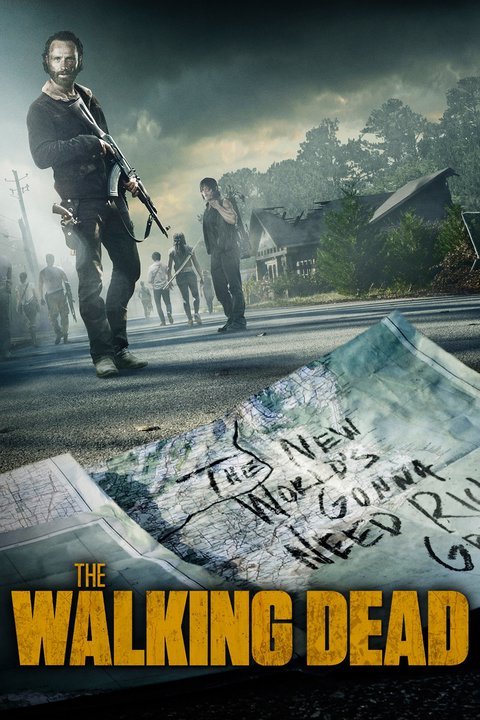
I have selected Frank Darabont to be the Executive producer and writer for this series because of his ability to take a an illustrated story such as Robert Kirkman’s comic book, The Walking Dead, plus texts from story books such as The Sawshank Redemption and The Green Mile, and adapt them into renowned award winning productions.
Franks role on AMC’s as Executive producer and series creator / writer on The Walking Dead seasons 1 and 2 is what initially bought the famed series its recognition, because of franks vested interested to be actively involved, not only with the writing and adaptation process, but also with the production and post production, making sure that the integrity of the series was fully kept, free from any network influence. At times if he was not happy with certain shots, he would even go out and do pickups just to make sure the shot is perfect. However, because of Franks passion for making sure the series was visually perfect, often gained him scrutinisation from AMC about the budget, due to AMC wanting to milk the cow dry without properly feeding it, and during the second season The Walking Dead was impacted upon by a post-season budget cut; going from the original budget of $3.4m per episode to $3m despite the show’s massive success, preventing Frank from continuing the creative formulae used in season 1. Unfortunately, during season 2 Frank was sacked from TWD, primarily over AMC’s concerns with the budget even though the show was a success, for them not only wanting the same results on a more restricted budget, but also for AMC pocketing the tax credit, which was a further blow and insult to injury to flame their argument over the budget cuts, as the 25% tax credit kept could of contributed towards the production of the series.
Having left the series, even though it is still running, ratings have not been the same and production has been stripped more as a result of the original series creator, Frank, no longer involved being involved in the series. He is only credited as the series creator of the adapted comic book.
People have said that if Frank had taken TWD and producer it on HBO, it would have been more of a success because the network is known to spend a lot on their production quality of big sets and locations, especially if the series is a success, because having prior successful shows which had big budgets, they know that maintaining the same quality will retain the same high level of ratings, resulting in the network being compensated even more.
Franks role on AMC’s as Executive producer and series creator / writer on The Walking Dead seasons 1 and 2 is what initially bought the famed series its recognition, because of franks vested interested to be actively involved, not only with the writing and adaptation process, but also with the production and post production, making sure that the integrity of the series was fully kept, free from any network influence. At times if he was not happy with certain shots, he would even go out and do pickups just to make sure the shot is perfect. However, because of Franks passion for making sure the series was visually perfect, often gained him scrutinisation from AMC about the budget, due to AMC wanting to milk the cow dry without properly feeding it, and during the second season The Walking Dead was impacted upon by a post-season budget cut; going from the original budget of $3.4m per episode to $3m despite the show’s massive success, preventing Frank from continuing the creative formulae used in season 1. Unfortunately, during season 2 Frank was sacked from TWD, primarily over AMC’s concerns with the budget even though the show was a success, for them not only wanting the same results on a more restricted budget, but also for AMC pocketing the tax credit, which was a further blow and insult to injury to flame their argument over the budget cuts, as the 25% tax credit kept could of contributed towards the production of the series.
Having left the series, even though it is still running, ratings have not been the same and production has been stripped more as a result of the original series creator, Frank, no longer involved being involved in the series. He is only credited as the series creator of the adapted comic book.
People have said that if Frank had taken TWD and producer it on HBO, it would have been more of a success because the network is known to spend a lot on their production quality of big sets and locations, especially if the series is a success, because having prior successful shows which had big budgets, they know that maintaining the same quality will retain the same high level of ratings, resulting in the network being compensated even more.
So for these reason, this is why i have decided to choose Frank Darabont as the series creator / writer and executive producer for the adaptation of GANGSTA, working with Kosuke to help develop the story into a television series.


